Power distribution & storage
Project Solutions
Configure distribution, storage and associated equipment around your loads, operating goals and site conditions.
Industrial Power Distribution
For industrial facilities and utilities, coordinate the incoming supply, transformation and load circuits within one electrical design. High and low voltage assemblies, substations and cabinets follow the drawings so design, procurement and installation teams can work together.
- Incoming supply & transformation
- Identify the supply voltage, incoming arrangement and transformer configuration, including the connections between high and low voltage equipment.
- Circuits & loads
- Use the equipment list, load information and electrical drawings to specify circuits, cabinet configurations and planned interfaces.
- Protection & monitoring
- Define protection, metering and monitoring requirements in the electrical design, together with interfaces to upstream control systems.
Complete Energy Storage Systems
ZKON offers energy storage batteries and complete energy storage systems. A complete proposal coordinates batteries, power conversion, controls and site distribution, with separate requirements for power, energy and operation.
Commercial and industrial projects can start with their load schedule, peak demand and existing generation. Equipment and operating strategies are selected for the project conditions.
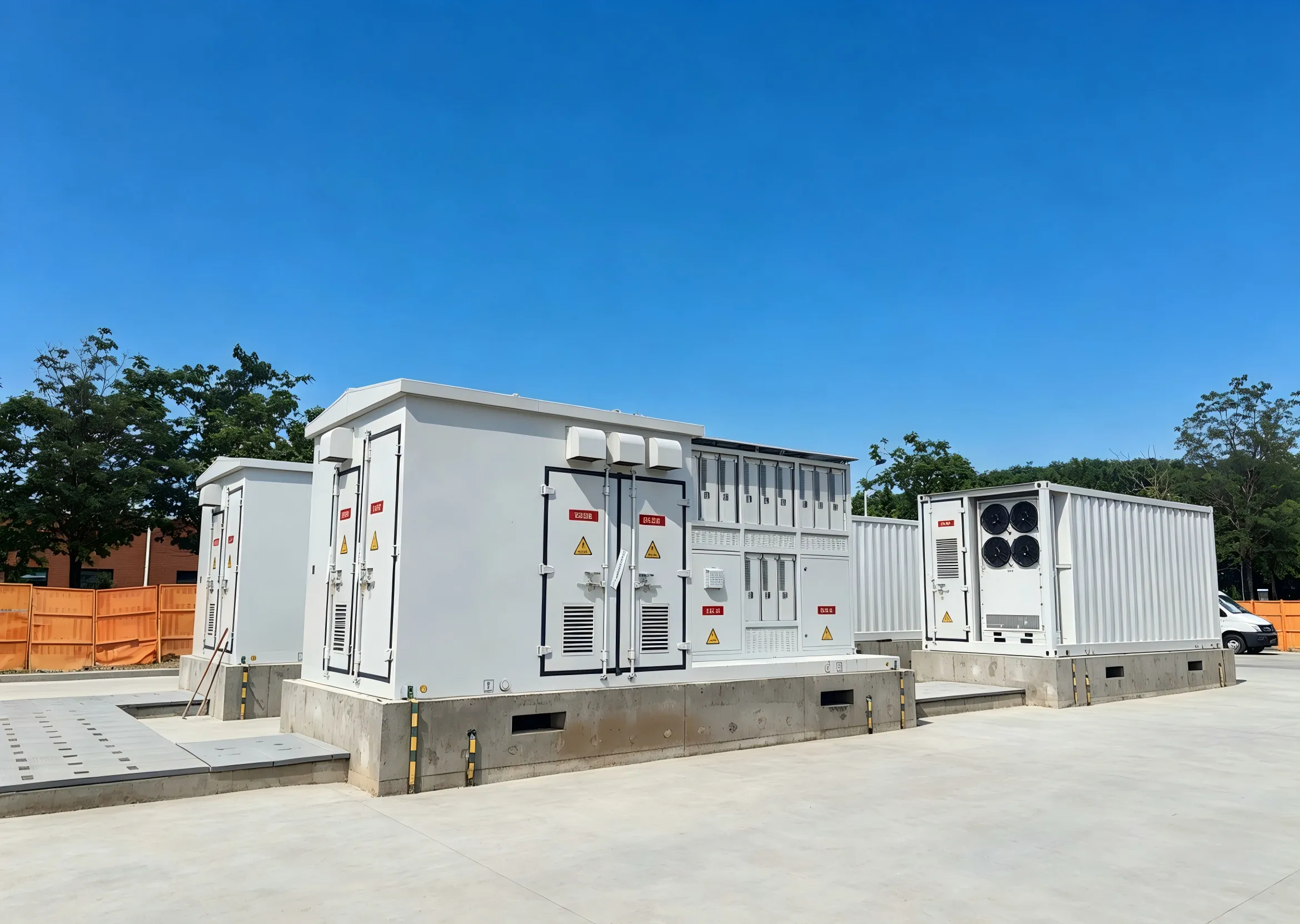
System Composition
Energy is charged and discharged through batteries, power conversion and site distribution. The control system coordinates equipment operation and monitoring.
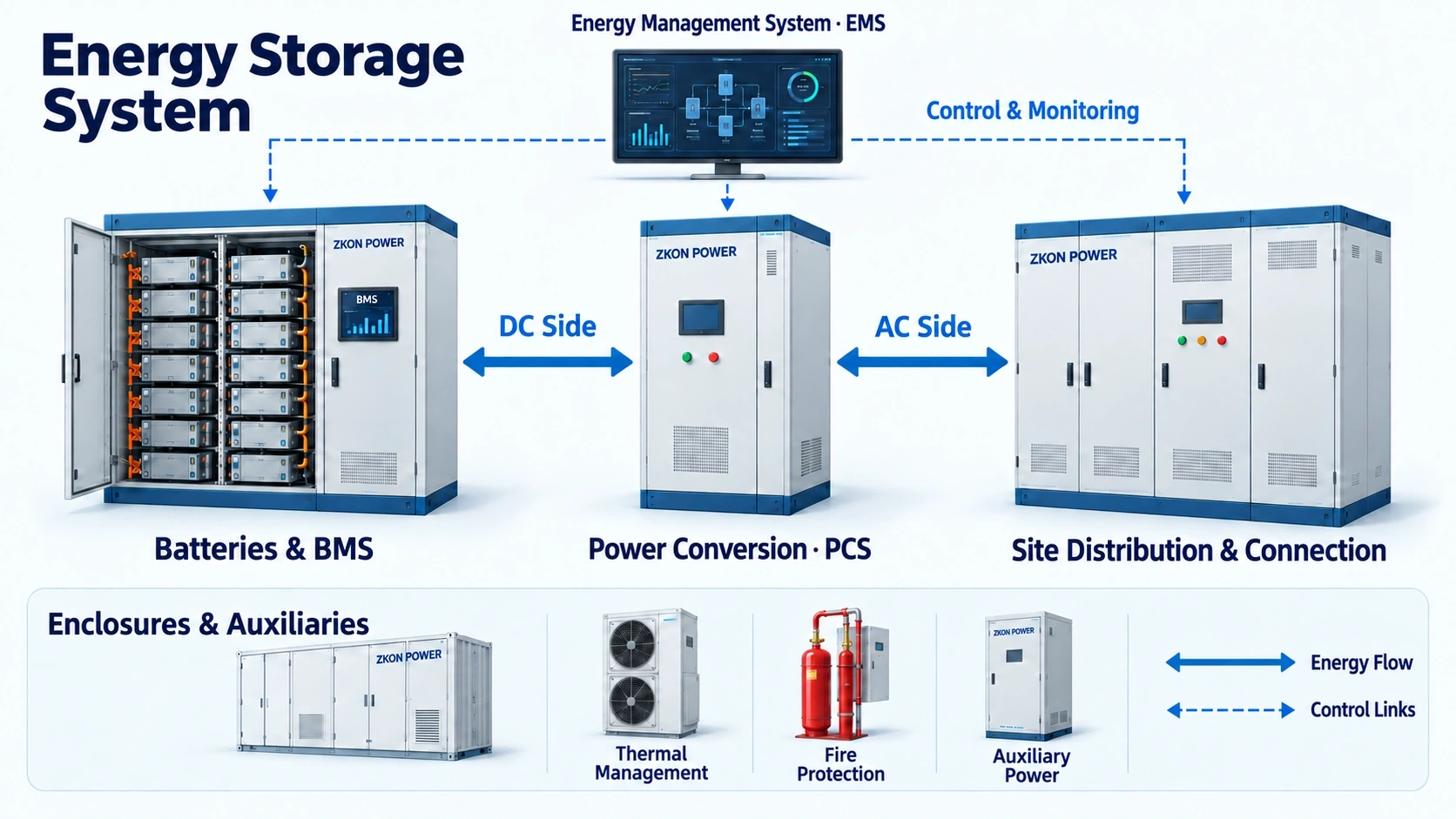 System CompositionView Full Size
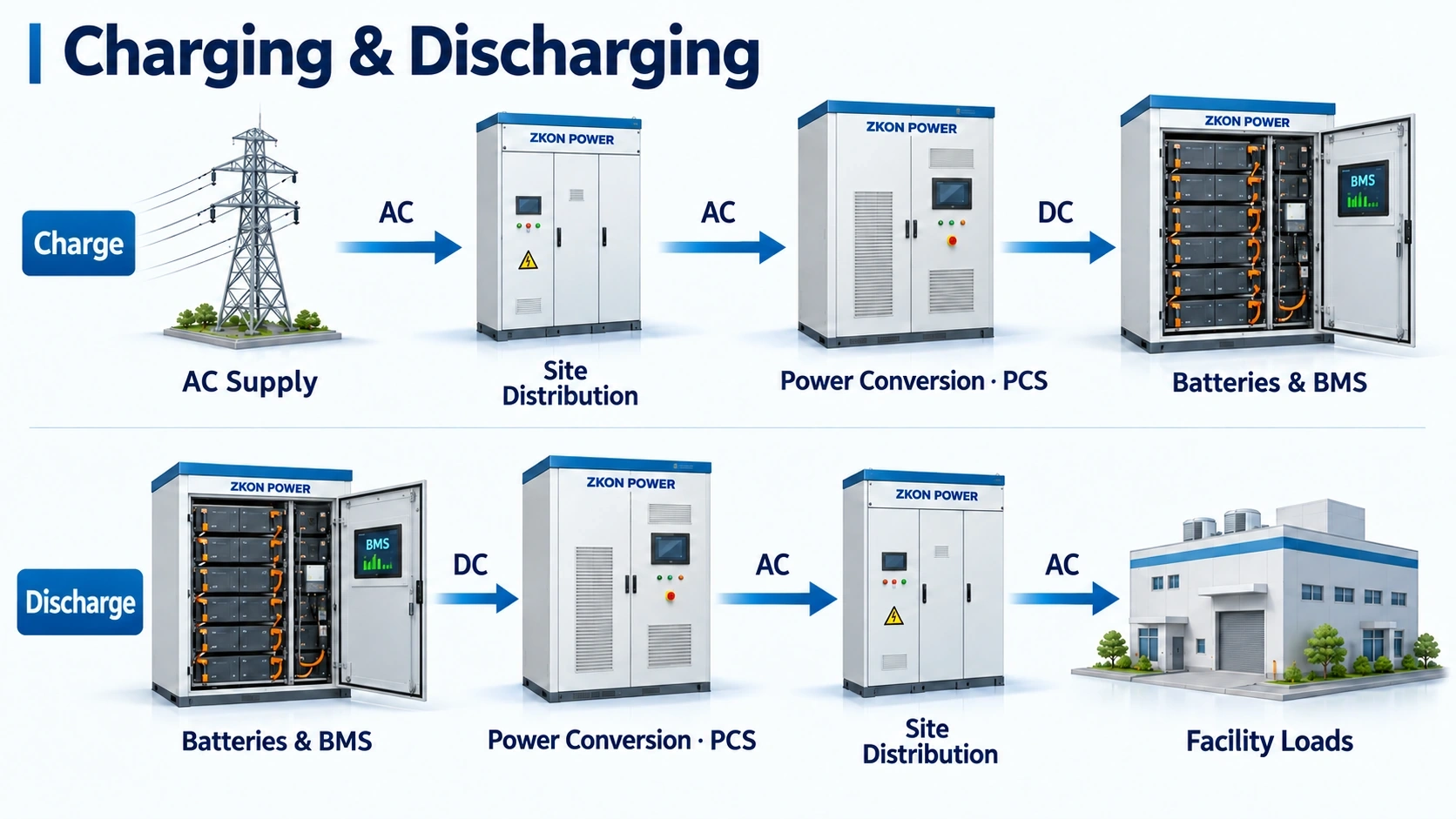 Charging & DischargingView Full Size
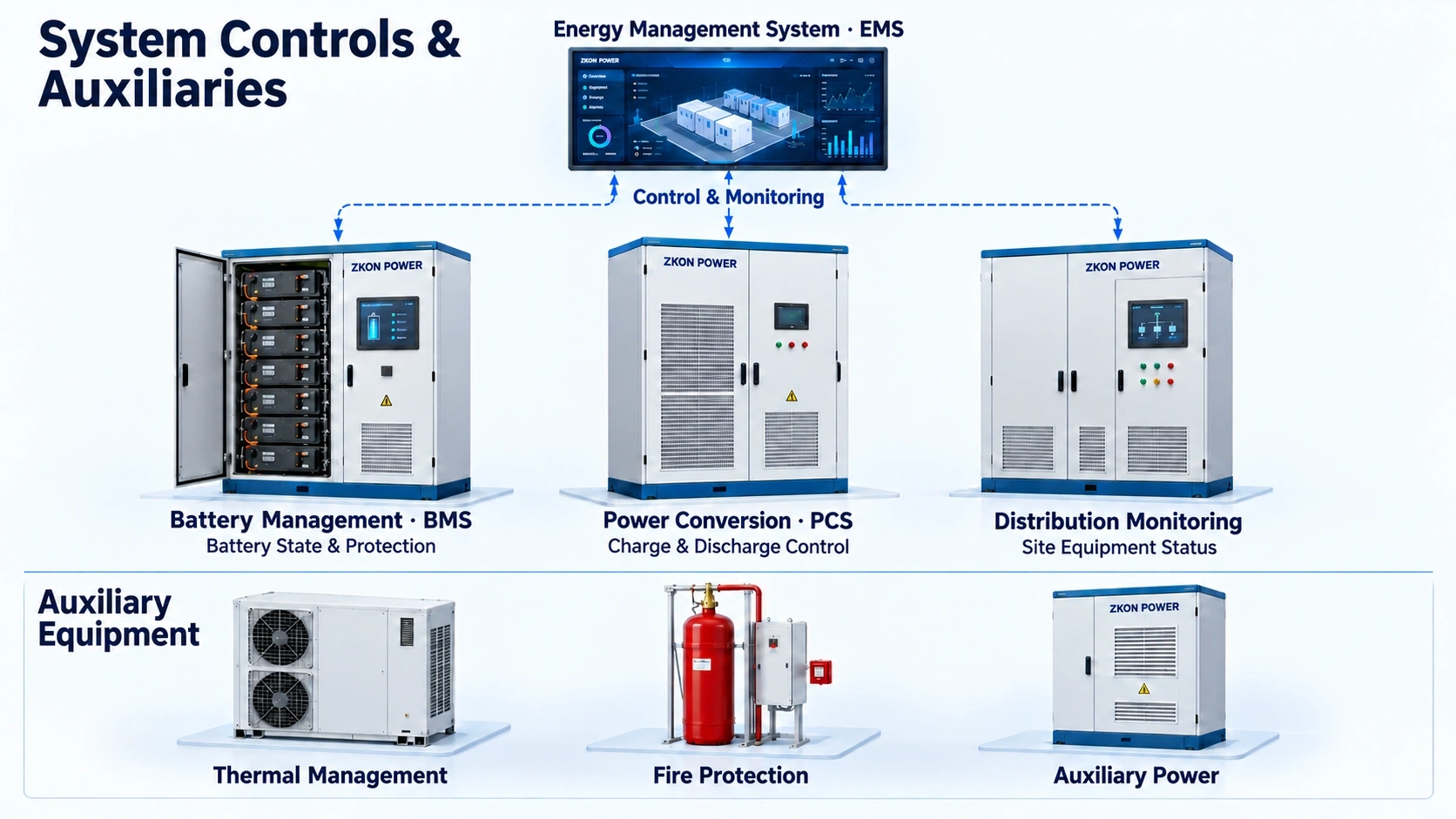 Controls & AuxiliariesView Full Size
Equipment Functions
- Energy Management System · EMS
- Coordinates charging, discharging and monitoring using operating schedules and equipment status. Communication interfaces are defined in the project proposal.
- Batteries & BMS
- Batteries store energy. The battery management system monitors battery conditions and supports battery protection.
- Power Conversion · PCS
- Converts between DC and AC in both directions, regulating charging and discharging power according to control requirements.
- Site Distribution & Connection
- Switching, protection, metering and any required transformer follow the drawings and connect to the project interface.
- Enclosures & Auxiliary Equipment
- Thermal management, fire protection and auxiliary power are coordinated with the equipment layout, environment and project requirements.
Energy Storage Projects
Substation & Prefabricated Cabin Integration
Coordinate electrical layouts and enclosure structures together. Prefabricated substations accommodate high voltage, transformer and low voltage compartments. High voltage cabins are arranged around equipment dimensions, mounting positions and connection interfaces.
- Equipment layout
- Review the equipment schedule and dimensions, allowing space for installation, connections, ventilation and maintenance.
- Structures & interfaces
- Define bases, mounting positions, doors, cable openings and site connection points in the drawings.
- Site installation
- Coordinate transport and lifting requirements, foundations, equipment access and the installation environment.
- Supply scope
- List enclosures, electrical equipment and auxiliary facilities separately, with the factory assembly and site work required.
Plan the Connection & Delivery
These four areas help design, purchasing, equipment supply and site teams agree the information and work required for the project.
- Electrical drawings & connection point
- Provide the single-line diagram, supply conditions, proposed connection point and existing equipment information. Identify connection, protection, metering and grid approval requirements for the project designers and relevant parties.
- Site space & maintenance
- Share the site layout, installation location and access conditions. Describe foundations, cable routes, maintenance space, ventilation, thermal management and fire protection requirements.
- Controls & operating goals
- Describe the intended operation, power and energy requirements, monitoring and communications. For backup or outage operation, specify the loads, switching arrangements and required duration.
- Equipment & delivery responsibilities
- List the equipment and accompanying documents. Agree responsibilities for transport, installation, connections, commissioning and acceptance, along with maintenance and service arrangements.